Irene passed away Feb 7, 2013 at 12:33pm, peacefully and comfortably at her
home attended by her family after a long battle with cancer. Mother of Michael Bouris of Vancouver, BC, and Amy Evens of St.
Thomas. Grandmother of Miles Evens of London, and Gabriel River Zay
Bouris of Vancouver, BC. Mother-in-law of Paul Evens of Atwood. Also
survived by 4 sisters, 4 brothers and many nieces, nephews, great-nieces
and great-nephews. She was 72 years old. She has been taken
for cremation as per her last wishes and will be interred in Sundown, Manitoba
beside her parents later this spring.
Born in Stuartburn Twp., MB, January 1, 1941, she
was the daughter of the late Phillip and Anastasia (nee Wepruk)
Kereliuk. Irene moved to Ontario from Manitoba in 1967 and to Sparta in
1992. Irene
was a nurse for many years being continuously employed in a variety of
clinical and teaching fields since graduating in 1963. She was a Registered Nurse at LHSC, South Street Hospital,
London. Irene was a member of the Registered Nurses’ Association of
Ontario, the Gerontological Nursing Association of Ontario and the Aylmer
Horticultural Club. Irene was an active member in many
communities and has a huge number of friends and colleagues.
She belonged to the St. Thomas Field Naturalists Club and signed petitions to save the Boreal Birds. In 2010 Irene received Central Elgin - Growing Together Awards for her field naturalist work and her natural home environment for wild life. She was also a member of the Canadian Peony Society and a staunch supporter of the Annual Root Sale fundraiser.
To honour her
passing and celebrate her life there will be a memorial open to the public held on
Friday, Feb 15 at 7:00 pm at Knox Presbyterian Church, 55 Hincks St., St.
Thomas , ON in Rodney Hall. There will be light refreshments available. There will be a private
interment in Ascension of Our Lord, Ukrainian Catholic Parish Cemetery,
Sundown, MB, in the spring. Memorial
donations made out to the St. Thomas Field Naturalists will be gratefully
accepted.
Our heartfelt condolences go out to her family.
As a non-profit organization, our mission as a Society is to promote cultivation and enjoyment of peonies in Canada.
- Home
- About CPS / SCP
- AGM 2016
- Events / Événements
- You are Invited to our Open Gardens! Visitez nos jardins de pivoines! 2016
- Seed Exchange graine de change / Propagation
- Root Sale
- Vente racine
- Origin and micropropagation
- Flower Forms In Peonies
- Peony Bloom Date Project
- Showing Peonies
- Pests and Disease
- Planting/ Care/Drying/ Cutting /Storing
- Hybridizing Peonies
- Dividing Your Peonies
- Peony Questions Answered
- Products/ Books On Peonies
- Suppliers and Group Links
- Strategic Review
- Contact Us / Membership Form / Constitution / By Laws
Friday, February 8, 2013
Sunday, January 27, 2013
Monday, January 14, 2013
ROSEMÈRE
BONJOUR À TOUS LA SOCIÉTÉ QUÉBÉCOISE organise pour la première L'EXPOSITION
CANADIENNE DE LA PIVOINE
LE 14 15 et 16 JUIN le comité est déja pret
martinus mooijekind responsable pour le QUÉBEC
LE 22 et 23 sera au tour du FESTIVAL DE LA PIVOINE DE LABEAUCE (PIVOINE EN CAVALE) sous la responsabilité de CLAUDE QUIRION
submitted by: M Mooijekind
LE 14 15 et 16 JUIN le comité est déja pret
martinus mooijekind responsable pour le QUÉBEC
LE 22 et 23 sera au tour du FESTIVAL DE LA PIVOINE DE LABEAUCE (PIVOINE EN CAVALE) sous la responsabilité de CLAUDE QUIRION
submitted by: M Mooijekind
Monday, December 31, 2012
Combination Peonies
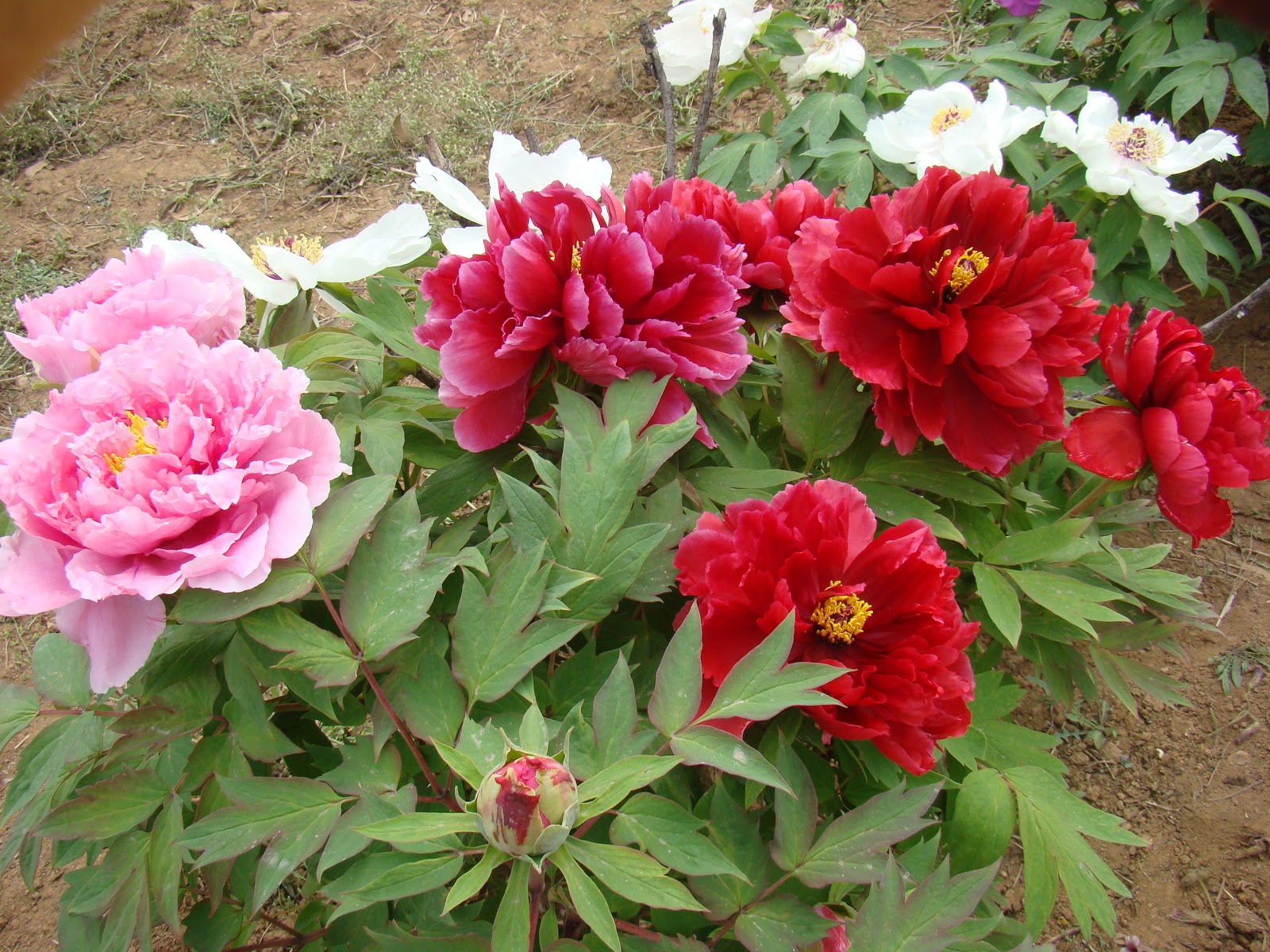
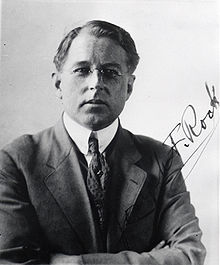
P. rockii tree peonies originated from China's northwest Gansu Province. This is the native to several wild species of tree peonies. Botanical explorer Joseph Rock discovered this plant in the early 1920s and they were introduced to European and American gardens 90 years ago.
The only one available for some time,"Rock's Peony". Original seed (supplied by Joseph Rock) grown stock was propagated and sent to botanical gardens.
Although these are rather recent introductions to western gardens, the area around the cities of Lanzhou and Linxia in Gansu have been centers of breeding and cultivation for centuries and hundreds of beautiful cultivars have been selected out by growers.
| Joseph Rock, Botanist Born 1884 Died 1962 |
| Rocks Peony |
Rock's peony or Rock's tree peony (Paeonia rockii, also Paeonia suffruticosa subsp. rockii) is a woody species peony that was named after Joseph Rock. It is one of several species given the vernacular name tree peony, and is native to the mountains of midwestern China, mainly in Gansu and adjoining provinces. In Chinese, it is known as 牡丹 (mǔ dān) or 牡丹皮 (mǔ dān pí), and its flower is called 牡丹花 (mǔ dān huā). It became the unofficial national flower of China following a nationwide referendum in 1994.
Keep reading for future updates.
submitted by: M Sequeira
info taken from Wikipedia and sent by Nursery in Gansu Province
Saturday, December 22, 2012
Sunday, December 16, 2012
Portes ouvertes à St-Stanislas de Kostka
une photo de mon jardin en plein dernière à St-Stanislas de Kostka l'image est dans le concours Fleurons du Québec
soumis par: Martinus Mooijekind
Saturday, December 15, 2012
Current Bloom Date Project, Part II
By Michael Denny
In the last CPS Newsletter, an article
described the history of the Bloom Date Project and the method used to
collect data. In this issue, I will discuss recent developments and the interpretation
of the bloom date evidence.
The project has a web site ( http://peonybloomdate.com ) that
contains several articles about the project and the data. There are two data
files that contain 11,000 observations on approximately 1100 cultivars. These
files contain the same evidence. However, the difference lies in that one file
sorts by the cultivar name, while the other sorts by the bloom offset. For each
cultivar, there are columns showing the description, the observations and the
offset. The description shows the colour but this is very elemental at the moment
and so almost the only colours cited are red, white and pink. (Better cultivar
descriptions are found in other sources.)
The crucial data in this project are the
observations and the offset. The observations indicate how many inspections
have been collected on the cultivar’s bloom date. This data is an indication of
the reliability of the evidence. The offset measures how many days the cultivar
first blooms before or after the peony Red Charm. The offset data for any
cultivar varies and I report the average offset. If there are only a few
observations, the average offset may be unreliable. As more observations are
collected, the average offset may change considerably. Currently there are five or more observations
on over 600 cultivars. This is
encouraging; but it indicates that for about 500 cultivars, there are only four
or fewer observations.
One of the reasons to continue to collect data
is to increase the number of observations on those cultivars, which currently
have relatively few observations. At the moment, I still have another 1100
observations on 500 cultivars that have not been included in the web site data.
These should be added this coming winter and hopefully will push some
additional cultivars beyond the five observations threshold. Please note that you should not assume that
the information on cultivars, which have only a few observations, is wrong. The
information may be correct. However, it
is a safer indication when there have been many observations.
How to Use the Data
Individuals
should use the offset evidence with some caution. Here is how I think about
this data. Suppose I am considering
three cultivars, peony A, peony B and peony C. The offsets are 7, 9 and 2 for
peony A, peony B and peony C respectively. The offsets for cultivars A and B
are close. So, I would consider them to bloom in my garden at the same time. It
may even be that A will bloom after B in some years. However, they should bloom
at about the same time.
Cultivar C has a lower offset and the difference
is large enough that I would assume C would bloom before the other two
cultivars. It may not bloom precisely five days before the others in my garden
but it should bloom earlier.
The
basic lesson is that the detailed data can be misleading; but when used with
caution, it can be very helpful. One can easily choose cultivars that will
bloom early in their garden as well as those which will bloom very late.
To my
way of thinking, the data provides a ranked list of blooming for peony
cultivars. At any given location and in different years the time between the
blooms for any given pair of cultivars can vary. If the weather is very warm,
the time shortens; if it is mild, the time expands.
Limitations
There are definite limitations to the data in
our project. First, we are dependent on many volunteers to observe and report
data. As a result, the following problems may arise: the identification of the
cultivar may be wrong; local soil, rain and the number of hours of sunshine can
alter the information. These I cannot control.
The major limitation arises from temperature variations both between
sites and across years.
At any site, the calendar dates on which a
cultivar blooms and the time between blooming for different cultivars is
altered by temperature patterns. The use of offsets from Red Charm represents an
attempt to address this. The offset adjustment is very useful; but it is far
too simple to completely adjust for temperature variations across sites and
across the years, even at the same site.
There is no simple alternative to our adjustment. In my judgement, the
project provides us with a large volume of useful information but we just need
to be careful in its use.
Future
In recent years, there have been
discussions about the creation of a new system of bloom information based on
weeks. This would build on the detailed project information but create six
categories that would cover all the cultivars. These efforts will be put
forward in a final article in the next issue.
Subscribe to:
Posts (Atom)