Taken from The Peony - C to C Vol 1, Issue 3 Nov 1998
written by Brian Porter
The Seager Wheeler Farm, just east of the town of Rosthern, Saskatchewan, is the newest location of a public peony planting in Saskatchewan.
Seager Wheeler (1868-1961) was perhaps the most famous prairie farmer in his day. While best known for his international awards in wheat competitions, Seager Wheeler was also involved in horticulture. Emigrating from England in 1885, he became an innovator in farming methods and eventually published his own book on grain growing, in 1919. Among his horticutural achievements, he introduced to his region the Siberian silverleaf willow, the Saskatchewan Crabapple, Prolific and Ruby cherry-plum hybrids, Advance sandcherry and Gold Coin potato. His farm was well known for its beautiful gardens, and in particular was known for its delphiniums and annual poppies. To my knowledge, Seager Wheeler was not involved much with peonies, but his farm now includes a modest historical collection of peonies.
The peonies have been donated by the Saskatchewan Horticultural Association and Hollingsworth Peonies of Maryville, Missouri. Because the site has been designated as a national historic site, it was felt appropriate that an historical collection of peonies could be grown in a couple of the rectangular beds, similar to the beds used by Seager Wheeler.
The beds have been designed to hold 40 cultivars of peonies, planted in chronological order. The limited number of plants (one of each cultivar) emant that a number of very good cultivars could not be accommodated, and the choice was dictated somewhat by availability. The first planting (about 75%) were planted in the fall of 1997. While most of the peonies are growing, it appears according to my records, that some peonies were planted in the wrong locations, and thus some investigation will need to be done to verify the cultivars and possibly replant them in their proper chronological order.
The peony collection is entriely herbaceous, as tree peonies require much more care to winter them successfully here. The collection begins with the cultivar 'Edulis Superba' (1824), and is followed by the well-known 'Festiva Maxima' (1851) and the now very rare Delachei (Emperor of Russia)(1856). 'Duchesse de Nemours (1856) and Augustin d'Hour (General MacMahon)(1865/67) are next in line. Seven more represent the 19th Century. The first bed is completed with 8 more cultivars from teh time period 1901 to 1918, and includes the widely known 'La France', 'Sarah Bernhardt', 'Karl Rosenfield' and 'Kelway's Florious'. These are all cultivars, which would have been available in seager Wheeler's time.
A second bed was included to bring the collection more up to date. Here, it was very difficult to select only 20 cultivars. The emphasis on Chinese peonies of double form was continued, although af ew hybrids such as 'Red Charm', 'Firebelle', and 'Pink Hawaiian Coral' have been included. Most notably, the Itoh Hybrid 'Garden Treasure', from Hollingsworth Peonies, was included, and it has survived its first winter. Another Hollingsworth donation, 'Sweet Melody' concludes the collection with its representative from 1992.
Recently I was informed that three plants have been seriously damaged by what appears to be botrytis blight. It is hoped that these will survive.
This fall, it is hoped to add a few more cultivars to the collection. One is 'La Perle', a rather elusive Crousse introduction from 1886.
It will be a few years before the collection will be in good bloom, but, we are hoping that it will become in time a notable tourist attraction to the Seager Wheeler Farm. In the meantime, visitors are welcome to the farm from Victoria Day Weekend to Labor Day, and can view the historic buildings, gift shop and teahouse, orchard, and English garden. The farm is located just of Hwy 312, approx. 8km east of Rosthern. From Saskatoon it is about 68km NE.
Thursday, April 22, 2010

Wednesday, April 7, 2010
The Historic Clarke Peony Collection at the Devonian Botanic Garden
by Deborah Merriam
The Devonian Botanic Garden (DBG) in Devon, Alberta (near Edmonton) has a sizeable collection of herbaceous and species peonies, most of which were donated by Cyril M. Clarke in the late 1940s. This collection includes a number of now-rare cultivars, and provides us with a fascinating glimpse into the history of peony cultivation in Alberta.
Cyril M. Clarke was born in 1882 in St. Lucia, British West Indies, the son of an Anglican minister and his West Indian wife. He was educated at Harvard and Cambridge, served in World War I with the British army, then emigrated to Canada. In 1920 he established his homestead at Teepee Creek, a hamlet 35 miles NE of Grande Prairie (250 miles NW of Edmonton). As a black, highly educated, lifelong bachelor, he must have puzzled his neighbors, who described him as an eccentric recluse and dismissed his farming abilities. After a severe dust allergy forced him to lease most of his farm in 1923, Clarke became a passionate collector of peonies who spent as much as he could spare on new cultivars. He’s said to have known the plants by sight, and had a scholarly grasp of each cultivar’s origin and characteristics. Clarke carefully authenticated the identity of the cultivars in his collection, where possible purchasing them directly from the breeder, and kept meticulous records of the dates and sources of all new acquisitions and their performance. Furthermore, Teepee Creek sits in a Chinook belt near the zone 2a/1b border, which he recognized was ideally situated for cold-hardiness trials. It’s estimated conservatively that Clarke tested about 2000 cultivars over his thirty years of collecting; as a result, he became a regular contributor to the American Peony Society’s Bulletin and was consulted by many of the leading hybridizers of the day. As he got older, Clarke developed a severe allergy to peonies, and cataracts caused his eyesight to deteriorate. Despite this he continued to care for his peonies himself, on his hands and knees, wearing long sleeves and a handkerchief over his face.
In the fall of 1947, the 43 best-performing cultivars from Clarke’s collection were planted in a long display bed at the Agriculture Canada Beaverlodge Research Station (BRS), to accompany the landscaping of the Station’s first office building. Nearly sixty years later, these plants still bloom magnificently from the last week of June until mid-July. They were originally planted in short rows of three plants per variety, in the layout used for early APS trials, and have not been moved. However, over time some rows became mixed, as divisions from vigorous plants in both this bed and the BRS’ trial beds (maintained from 1922-1965) were used to fill gaps. No records were kept of these alterations to the planting plan, complicating attempts by BRS staff to positively identify the cultivars.
Simultaneously, Clarke arranged the donation of the majority of his collection to the University of Alberta, in part from his hospital bed. His deteriorating eyesight during this period is heartbreakingly apparent in his handwriting in the correspondence, and many of the plants had to be dug and shipped with the assistance of friends. Between 1948 and 1951, Clarke donated his records and 921 specimens consisting of 331 named varieties, 3 species, and 14 hybrids to the Department of Horticulture. This collection included all of the proven cultivars planted at the BRS, as well as other cultivars considered highly desirable by pre-WWII plantsmen, and many cultivars that were being tested for hardiness prior to their general introduction to the gardening public. Canadian-bred cultivars in the collection included James W. Keagey’s ‘Dieppe’, ‘Dunkirk’, ‘Falaise’, ‘Margaret Logie’, ‘Nosegay’, ‘Premier Yoshida’, ‘Rose Bowl’, ‘White Bomber’, and ‘White Cockade’; William Brown’s unnamed seedling #666, ‘Donna Jean’, and ‘Fairleigh’; Dr. F.G. Brethour’s ‘Blanche Elie’; and Evelyn Lossing’s ‘Louise Lossing’. Clarke’s correspondence with the U. of A. indicates that the Department of Horticulture intended to continue collecting new sorts and to evaluate and report the performance of the cultivars in the collection to the APS. The collection was initially planted to the north of McKenzie Hall, in 6 formal beds near the old greenhouse and tennis courts, and marked with a commemorative bronze plaque. Sadly, Clarke passed away before the plants could bloom and their identification be verified by him.
As the University grew, the herbaceous peony collection was moved to a new location beside Kelsey Hall. The plants were also regularly used as landscaping material by the Grounds department. No records have been found to date of the changes made during this period. In 1965, some divisions of the original plants were supplied to the university’s newly established Botanic Garden near Devon (zone 2a). The rest of the collection was moved at a later date from campus to its current location, in broad island beds of very sandy soil at the northern end of the garden. During these moves, some plants were lost and some labels misplaced, and reidentification was complicated by the inadequacy of early descriptions to differentiate similar varieties. Finally, a number of labels were accidentally lost during weeding in the 1980s. For want of peony expertise on the DBG’s staff, care of the herbaceous peony collection since the 1970s has been limited to routine maintenance. Only a handful of newer cultivars have been added, either as donations from local growers or acquisitions during the establishment of the Kurimoto Japanese Garden. A separate species peony collection (which I’ll describe in a future article) has fared rather better, thanks to continued acquisitions and research done by DBG staff.
The Clarke collection is of special interest to peony fanciers, both for historic reasons and on the merit of the plants themselves, which are both very hardy and increasingly rare in home gardens. The Alberta chapter of the CPS has proposed a long-term partnership with the DBG. Our goals will be to preserve the collection and improve the care of the plants, identify unlabelled plants where possible, reintroduce ‘lost’ cultivars from the original Clarke collection, broaden the collection to include recent cultivars, and eventually replant the collection in a design more suitable for easy viewing and year-round interest. In turn, the DBG has offered us meeting space and the opportunity for members interested in hybridization to use plants in the collection as breeding stock.
References:
“History, Management, and Recommended Varieties of Peonies in the Peace River Region”, John G.N. Davidson, 1991. Agriculture Canada Northern Research Group Bulletin (NRG 90-09b).
"Cyril M. Clarke, Widely Known Canadian Horticulturist, Dies At Home" (obituary), George W. Peyton, American Peony Society Bulletin, no. 127, Dec 1952.
Collected correspondence of Cyril M. Clarke with R. J. Hilton and R. H. Knowles, University of Alberta Department of Horticulture, 1947-1951. Devonian Botanic Garden archives.
The Devonian Botanic Garden (DBG) in Devon, Alberta (near Edmonton) has a sizeable collection of herbaceous and species peonies, most of which were donated by Cyril M. Clarke in the late 1940s. This collection includes a number of now-rare cultivars, and provides us with a fascinating glimpse into the history of peony cultivation in Alberta.
Cyril M. Clarke was born in 1882 in St. Lucia, British West Indies, the son of an Anglican minister and his West Indian wife. He was educated at Harvard and Cambridge, served in World War I with the British army, then emigrated to Canada. In 1920 he established his homestead at Teepee Creek, a hamlet 35 miles NE of Grande Prairie (250 miles NW of Edmonton). As a black, highly educated, lifelong bachelor, he must have puzzled his neighbors, who described him as an eccentric recluse and dismissed his farming abilities. After a severe dust allergy forced him to lease most of his farm in 1923, Clarke became a passionate collector of peonies who spent as much as he could spare on new cultivars. He’s said to have known the plants by sight, and had a scholarly grasp of each cultivar’s origin and characteristics. Clarke carefully authenticated the identity of the cultivars in his collection, where possible purchasing them directly from the breeder, and kept meticulous records of the dates and sources of all new acquisitions and their performance. Furthermore, Teepee Creek sits in a Chinook belt near the zone 2a/1b border, which he recognized was ideally situated for cold-hardiness trials. It’s estimated conservatively that Clarke tested about 2000 cultivars over his thirty years of collecting; as a result, he became a regular contributor to the American Peony Society’s Bulletin and was consulted by many of the leading hybridizers of the day. As he got older, Clarke developed a severe allergy to peonies, and cataracts caused his eyesight to deteriorate. Despite this he continued to care for his peonies himself, on his hands and knees, wearing long sleeves and a handkerchief over his face.
In the fall of 1947, the 43 best-performing cultivars from Clarke’s collection were planted in a long display bed at the Agriculture Canada Beaverlodge Research Station (BRS), to accompany the landscaping of the Station’s first office building. Nearly sixty years later, these plants still bloom magnificently from the last week of June until mid-July. They were originally planted in short rows of three plants per variety, in the layout used for early APS trials, and have not been moved. However, over time some rows became mixed, as divisions from vigorous plants in both this bed and the BRS’ trial beds (maintained from 1922-1965) were used to fill gaps. No records were kept of these alterations to the planting plan, complicating attempts by BRS staff to positively identify the cultivars.
Simultaneously, Clarke arranged the donation of the majority of his collection to the University of Alberta, in part from his hospital bed. His deteriorating eyesight during this period is heartbreakingly apparent in his handwriting in the correspondence, and many of the plants had to be dug and shipped with the assistance of friends. Between 1948 and 1951, Clarke donated his records and 921 specimens consisting of 331 named varieties, 3 species, and 14 hybrids to the Department of Horticulture. This collection included all of the proven cultivars planted at the BRS, as well as other cultivars considered highly desirable by pre-WWII plantsmen, and many cultivars that were being tested for hardiness prior to their general introduction to the gardening public. Canadian-bred cultivars in the collection included James W. Keagey’s ‘Dieppe’, ‘Dunkirk’, ‘Falaise’, ‘Margaret Logie’, ‘Nosegay’, ‘Premier Yoshida’, ‘Rose Bowl’, ‘White Bomber’, and ‘White Cockade’; William Brown’s unnamed seedling #666, ‘Donna Jean’, and ‘Fairleigh’; Dr. F.G. Brethour’s ‘Blanche Elie’; and Evelyn Lossing’s ‘Louise Lossing’. Clarke’s correspondence with the U. of A. indicates that the Department of Horticulture intended to continue collecting new sorts and to evaluate and report the performance of the cultivars in the collection to the APS. The collection was initially planted to the north of McKenzie Hall, in 6 formal beds near the old greenhouse and tennis courts, and marked with a commemorative bronze plaque. Sadly, Clarke passed away before the plants could bloom and their identification be verified by him.
As the University grew, the herbaceous peony collection was moved to a new location beside Kelsey Hall. The plants were also regularly used as landscaping material by the Grounds department. No records have been found to date of the changes made during this period. In 1965, some divisions of the original plants were supplied to the university’s newly established Botanic Garden near Devon (zone 2a). The rest of the collection was moved at a later date from campus to its current location, in broad island beds of very sandy soil at the northern end of the garden. During these moves, some plants were lost and some labels misplaced, and reidentification was complicated by the inadequacy of early descriptions to differentiate similar varieties. Finally, a number of labels were accidentally lost during weeding in the 1980s. For want of peony expertise on the DBG’s staff, care of the herbaceous peony collection since the 1970s has been limited to routine maintenance. Only a handful of newer cultivars have been added, either as donations from local growers or acquisitions during the establishment of the Kurimoto Japanese Garden. A separate species peony collection (which I’ll describe in a future article) has fared rather better, thanks to continued acquisitions and research done by DBG staff.
The Clarke collection is of special interest to peony fanciers, both for historic reasons and on the merit of the plants themselves, which are both very hardy and increasingly rare in home gardens. The Alberta chapter of the CPS has proposed a long-term partnership with the DBG. Our goals will be to preserve the collection and improve the care of the plants, identify unlabelled plants where possible, reintroduce ‘lost’ cultivars from the original Clarke collection, broaden the collection to include recent cultivars, and eventually replant the collection in a design more suitable for easy viewing and year-round interest. In turn, the DBG has offered us meeting space and the opportunity for members interested in hybridization to use plants in the collection as breeding stock.
References:
“History, Management, and Recommended Varieties of Peonies in the Peace River Region”, John G.N. Davidson, 1991. Agriculture Canada Northern Research Group Bulletin (NRG 90-09b).
"Cyril M. Clarke, Widely Known Canadian Horticulturist, Dies At Home" (obituary), George W. Peyton, American Peony Society Bulletin, no. 127, Dec 1952.
Collected correspondence of Cyril M. Clarke with R. J. Hilton and R. H. Knowles, University of Alberta Department of Horticulture, 1947-1951. Devonian Botanic Garden archives.
Monday, April 5, 2010
STAMP OF APPROVAL MAIL IT WITH FLOWERS:


Release of the newest floral-themed stamp (two peony hybrids). Oakville was selected as the stamp cancel's* origin due to the city's history with the Canadian Peony Society. To mark the occasion, Canada Post hosted a Customer Appreciation Day. Mr. John Simkins, 39-year Oakville resident Founder of the Canadian Peony Society (Peony subject matter expert)holds up the new stamps with Sheila Black, Canada Post.
Photo's by Liesa Kortmann Originally published in Oakville Beaver Mar 7, 2008
Information below provided by Canada Post on the occasion of issue of two peony stamps March 3, 2008
Two of Canada's most popular flowers are featured in new stamps for 2008. On March 3, Canada Post will issue two stamps dedicated to peonies (Paeonia lactiflora). The stamps capture two Canadian hybrids in all their blooming glory: the 'Elgin' and the 'Coral n Gold'.
The 'Coral n Gold' hybrid was named for the appealing colour combination of its blossoms. Bred by Lyman Cousins in London, Ontario, the 'Coral n Gold' features a cup of bright petals surrounding golden stamens.
To photograph appropriate specimens, Isabelle Toussaint, a freelance designer in Montreal, travelled to Ottawa and visited greenhouses at the Central Experimental Farm and Algonquin College. In the design, Toussaint created a soft, neutral background and used close-cut and shadowing techniques to emphasize the blooms and foliage. "I love to work in my garden, although I'm by no means an expert," says Toussaint. "The challenge was to create a stamp that mimics the impact that peonies have - when they flower, they make a bold statement."
The peony stamps continue Canada Post's informal tradition of issuing floral-themed stamps in the spring. Previous stamps have featured daffodils, lilacs and gardens. The spring issues have proven popular not only with collectors, but also with people sending out invitations to weddings and parties.
The domestic rate (52¢) stamps will be sold in booklets of ten; official first day covers and souvenir sheets will also be available.
Note the number of stamps printed: 12 million stamp booklets, and 275,000 Souvenir sheets of 2 stamps.
Official First Day Cover (OFDC) - Cancellation Oakville, Ontario
Product No. & Quantity: 413696131($2.04-23,000)
Canada Post gave members of the CPS complementary copies of an Official First Day Cover. A fitting souvenir which celebrates the launch of two peony stamps. We are pleased to pass on this collector's item to all current members of the CPS.
Sunday, April 4, 2010
Ferncliff Gardens
by Margaret Sequeira
Taken from Heritage Places/Mission Community Archives
Mr Milton Jack bought property from Wm McEwen and Tom Catherwood, and launched Ferncliff Gardens at Hatzic in 1920. There, he hybridized and developed new forms of gladioli and other flowers, which were shipped to customers throughout North America, and sent to major shows and competitions. Where blooms were entered for competition, over fifty first prizes were won, the great majority of these being won by Mr. Jack's own originations; many of his varieties are successfully grown as grand champions in international shows.
On September 18, 1947 the Fraser Valley Record ran a story in which Mr. Milton Jack explained how the Bulb Industry had developed. The paper reports that Mr. Jack had recently returned from visiting a number of the major gladiolus shows in the Pacific North West area where he displayed his own originations.
In 1953 Mr. Jack was awarded a Bronze Plaque for his conspicuous contribution to advancement of gladiolus from the North American Gladiolus Council.1 Mr. Jack was selected for the award because of his contributions during the past 30 years in hybridizing and developing new varieties of gladiolus. The award was presented for the first time to anyone living in the Pacific Northwest.
In the forties and fifties the private gardens and the Jack family home was the scene of the annual "Strawberry Social" tea of the Hatzic United Church.
The Jack family continues to operate a retail nursery growing high quality dahlias, iris, daylilies and peonies.
+II.jpg)
The Jack home, built in 1922 is two stories, Tudor style white stucco with brown trim, at least 6 small windows on the second story, 2 larger windows on the first story. The interior includes spacious well-maintained rooms, which provide a gracious setting for many gatherings and special events.
Rural farmland features fields of flowers. The owner's personal gardens comprise about 3/4 acre.
Daughter Elsie Jack remembers that the private flower garden at Ferncliff became very lovely over the years. A spacious terraced lawn over looks the valley. To the north a wide border of trees and Azaleas. A border of low growing Juniper marked the boundary where the hill sloped steeply down in front of the Juniper, Azaleas, Dwarf Shrubs and Perennials. On the west side a pergola about sixty feet long covered by wisteria, and some other climbers along the way marked the end of the lawn. Below the Pergola on a slope was her father's hobby, a rock garden, full of unusual Alpine plants.
Ferncliff Gardens is an internationally acclaimed "pioneer flower farm" located at 8502 McTaggart Street V2V 6S6 in Hatzic, just east of Mission. Pioneers in the horticultural mail order service and hybridizing of new varieties of flowers, the members of the Jack family have adapted their business over the past eighty-eight years, (1920 to present) making it the oldest family operated business in Mission.
The property includes 10 acres of farmland and the private residence. The house sits on the eastern end of the farmland overlooking the eastern Fraser Valley.
Taken from Heritage Places/Mission Community Archives
Mr Milton Jack bought property from Wm McEwen and Tom Catherwood, and launched Ferncliff Gardens at Hatzic in 1920. There, he hybridized and developed new forms of gladioli and other flowers, which were shipped to customers throughout North America, and sent to major shows and competitions. Where blooms were entered for competition, over fifty first prizes were won, the great majority of these being won by Mr. Jack's own originations; many of his varieties are successfully grown as grand champions in international shows.
On September 18, 1947 the Fraser Valley Record ran a story in which Mr. Milton Jack explained how the Bulb Industry had developed. The paper reports that Mr. Jack had recently returned from visiting a number of the major gladiolus shows in the Pacific North West area where he displayed his own originations.
In 1953 Mr. Jack was awarded a Bronze Plaque for his conspicuous contribution to advancement of gladiolus from the North American Gladiolus Council.1 Mr. Jack was selected for the award because of his contributions during the past 30 years in hybridizing and developing new varieties of gladiolus. The award was presented for the first time to anyone living in the Pacific Northwest.
In the forties and fifties the private gardens and the Jack family home was the scene of the annual "Strawberry Social" tea of the Hatzic United Church.
The Jack family continues to operate a retail nursery growing high quality dahlias, iris, daylilies and peonies.
Milton Jack Peony Introductions
Linda K Jack - 1970 - Double, large, deep, rose-red, highly fragrant, late.
Good stems and strong growth. Not offered by Ferncliff since 1992.
Named for a daughter of Milton Jack
Milton Jack - 1980 - Semi Double to Double, rose-red, excellent petal texture;
flowers stand up well, good stems; early midseason
Mimi - 1974 - Japanese, clear medium pink with golden stamens, free blooming
midseason, resembles Do Tell. No longer in commerce;
last offerd by Ferncliff in 1985
Unknown Soldier - 1949 - Ferncliff Gardens received this plant mixed in with a shipment
of peonies from Holland, and was unable to identify it, so gave it the present name.
Flowers are double, cerise red, lightening with age, with ruffled petals, rose or semi rose
form, with stamens near center usually hidden but occasionally showing. Reasonably
strong stems, but may need support. Blooms late midseason. Good fragrance for red cultivar.
Reverend Milton Jack was born in Chateauguary, Quebec and educated at McGill and Chicago universities. He entered the Canadian Presbyterian Mission in 1905. He was principal of the Theological Training School in Formosa and later joined the faculty of the University of Seoul, Korea. He also did missionary work on Formosa and the Chinese mainland, where he contracted malaria. After a lifetime of recognition, Mr. Jack passed away at his home on December 5th ca 1964 at the age of 88. He was survived by his wife Catherine Winifred Jack; two sons, Lawrence and Wilfred (operated business along with his father); two daughters, Miss Elsie Jack and Mrs. Gilmour (Marjory) Clark and eight grandchildren. Pallbearers were Ross Clark of Vancouver, Robert Jack, David Jack, Colin Jack, Jack Peetoom and Al Pethybridge.
The 1975 Ferncliff Gardens catalogue states remittances were payable to W.R. Jack
+II.jpg)
David Jack - grandson; continues to operate Ferncliff Gardens with his wife Sheila. In 2008, they were awarded a special recognition by the Mission Community Heritage Commission for continued operation of the pioneer family business. David, the dahlia expert, has been growing dahlias for over 40 years. David graduated from the University of Guelph with an Ontario Diploma in Horticulture (O.D.H.).
.jpg)
.jpg)
.jpg)
The Jack home, built in 1922 is two stories, Tudor style white stucco with brown trim, at least 6 small windows on the second story, 2 larger windows on the first story. The interior includes spacious well-maintained rooms, which provide a gracious setting for many gatherings and special events.
Rural farmland features fields of flowers. The owner's personal gardens comprise about 3/4 acre.
Daughter Elsie Jack remembers that the private flower garden at Ferncliff became very lovely over the years. A spacious terraced lawn over looks the valley. To the north a wide border of trees and Azaleas. A border of low growing Juniper marked the boundary where the hill sloped steeply down in front of the Juniper, Azaleas, Dwarf Shrubs and Perennials. On the west side a pergola about sixty feet long covered by wisteria, and some other climbers along the way marked the end of the lawn. Below the Pergola on a slope was her father's hobby, a rock garden, full of unusual Alpine plants.
Ferncliff Gardens is an internationally acclaimed "pioneer flower farm" located at 8502 McTaggart Street V2V 6S6 in Hatzic, just east of Mission. Pioneers in the horticultural mail order service and hybridizing of new varieties of flowers, the members of the Jack family have adapted their business over the past eighty-eight years, (1920 to present) making it the oldest family operated business in Mission.
The property includes 10 acres of farmland and the private residence. The house sits on the eastern end of the farmland overlooking the eastern Fraser Valley.
Saturday, April 3, 2010
Rowancroft Garden History
Taken from Mills to Milleneum (Meadowvale Book Pt III) and Peony Roots by Michael Denny The Peony - C to C Vol2 Issue 1 Feb 1999
Rowancroft Gardens had its beginning in 1914 created by Miss Mary E. Blacklock. She had purchased 5 acres (2ha) of Lot 10, Con.3, WHS,(west of Toronto Airport in Mississauga. It was just South off the Malton Sideroad, now Derry Road, west of Hwy 10 on East side of Credit River) in October, 1913 for $1,500.00 from Francis Jackson and established a botanical garden. She lived in a two storey Georgian style home of wood siding construction. On April 10, 1918 she purchased another 2.4 acres (1ha) for $732.00 from Goldwin Smith. By 1920, business was booming so well she had 7 people in her employ, that were required for eight months of the year. She hired several others during the growing season.

It was a favourite spot for people to stroll, especially in June when peonies were in full bloom.
Miss Blacklock was born in Hastings, ON to John and Louise Blacklock. When she was a young lady, her family moved to Toronto, where her gardening expertise was nurtured and took root. She planted a garden at their Davenport Road home. She sold plants for 5 and 10 cents and 25 cents for shrubs and donated the money to St.Annes Anglican Church Building Fund.
She started correspondence with horticulturalists and collected seeds from all over the world until she had an outstanding collection of flowers in her garden and tremendous knowledge.
Upon her fathers passing in 1910, she started to travel to visit the horticulturalists she had been corresponding with. She visited the Kew Gardens in London, England the gardens of Frenchmen, near Tours, France. Here she found peonies, which became her passion. From Mons. V. Lemoine in France, she was introduced to lilacs she adored and would transport to Canada.
In 1914, before the start of WWI, she established Rowancroft Gardens. Her french peonies and lilacs were much appreciated when she introduced them here. Seeds from this stock replenished their supply of lilacs, of which the fragrance was thoroughly enjoyed during the blooming season in the spring.
She entered floral competitions at Horticultural Shows around the province. She took first prize at the Toronto Horticultural Show for her irises and a first at the London International Show for peonies.

In 1915, Miss Minerva Swann Castle began to work with Miss Blacklock as a helper. She was tremendously horticulturally conscious and gardeners began to flock to Rowancroft Gardens to learn from her astonishing plant knowledge. It was said that she had an intense interest in all growing things, the capacity for hard work, and a keen sense of humour that endeared her to the customers in the village.
Miss Castle, as a member of the Meadowvale Women's Institute, was instrumental in starting up the first library in Meadowvale in 1929 and she became the first Librarian. In 1937, she served as the president of the Streetsville Anglican Church Chancel Group. On August 7, 1941, she purchased a piece of property from Miss Blacklock and had a one and a half storey three room frame house built on the same laneway and was given the right-of-way to get out to Derry Road. She was a founding member of the Credit Valley Conservation Authority in 1954 and was also very active with the Toronto Garden Club for many years.
Miss Blacklock passed away in 1956 at her home in her 96th year. Upon Miss Blacklock's death, Minerva Castle became partners in Rowancroft Gardens with Miss Ethel Winter. Their business flourished. Miss Castles favourite peony was Grace Adams, named for one of the Garden's workers. It was a large white bloom with golden stamens in its center. Miss Castle became known and respected across Canada for the supreme stock and as being one of the countries best plants-men. She was an accomplished grower of peonies and perennials. Her peonies were shipped as far as Australia.
In the 1960's a Rowancroft catalogue offered seventy peonies for sale. Most of the peonies were available for $1 or $2 per plant. Eight of those listed were cultivars hybridized by Miss Blacklock and two by Mr Brown who had a peony nursery in Elora, ON.
Miss Castle had been presented with many awards over her lifetime:
1961 Britains Royal Horticultural Award of Merit for the "Sorbus Rowancroft Pink" Coral Mountain Ash
1964 Dominion Life Membership Pin at the 75th Anniversary of Trinity's Church Women's Auxillary
1967 Federal Government's Centennial Medal for Red Cross involvement and contribution to the horticultural industry
1969 the first Gold Medal ever presented from the Toronto Garden Club for achieving most outstanding contribution to Horticulture in Canada presented by Dr Leslie Laking
Miss Castle passed away January 1, 1976 at age 84. The service was held at the Streetsville Trinity Anglican Church on Monday January 5 with services conducted by Reverend David Busby, Rev. David Adams and Lay Reader, Sam McCallion. She was buried at Mount Pleasant Cemetary in Toronto.
On Friday October 21, 1977, over 100 people gathered to pay tribute to Minerva Castle at the Meadowvale Community Hall. Organized by the Women's Institute, of which she was a devoted member since 1910. Councillors Hazel McCallion and Larry Taylor, Chief Librarian Noel Ryan and Rev. David Busby assembled for the unveiling of a plaque that would be hung in the Community Hall. Unveiled by a relative, John Beck. It read "To commemorate the Generosity of Minerva S. Castle to the Village of Meadowvale, 1891-1976."
Before Miss Castle passed away her property was sold to Frank Baldesarra, who lived in the village of Meadowvale. He has quite a history with the property, where he has built himself a spectacular two storey red brick mansion. He tore down her house in 2002, and rents the elegant Blacklock house at 1160 Derry Road.
Rowancroft Gardens had its beginning in 1914 created by Miss Mary E. Blacklock. She had purchased 5 acres (2ha) of Lot 10, Con.3, WHS,(west of Toronto Airport in Mississauga. It was just South off the Malton Sideroad, now Derry Road, west of Hwy 10 on East side of Credit River) in October, 1913 for $1,500.00 from Francis Jackson and established a botanical garden. She lived in a two storey Georgian style home of wood siding construction. On April 10, 1918 she purchased another 2.4 acres (1ha) for $732.00 from Goldwin Smith. By 1920, business was booming so well she had 7 people in her employ, that were required for eight months of the year. She hired several others during the growing season.

It was a favourite spot for people to stroll, especially in June when peonies were in full bloom.
Miss Blacklock was born in Hastings, ON to John and Louise Blacklock. When she was a young lady, her family moved to Toronto, where her gardening expertise was nurtured and took root. She planted a garden at their Davenport Road home. She sold plants for 5 and 10 cents and 25 cents for shrubs and donated the money to St.Annes Anglican Church Building Fund.
She started correspondence with horticulturalists and collected seeds from all over the world until she had an outstanding collection of flowers in her garden and tremendous knowledge.
Upon her fathers passing in 1910, she started to travel to visit the horticulturalists she had been corresponding with. She visited the Kew Gardens in London, England the gardens of Frenchmen, near Tours, France. Here she found peonies, which became her passion. From Mons. V. Lemoine in France, she was introduced to lilacs she adored and would transport to Canada.
In 1914, before the start of WWI, she established Rowancroft Gardens. Her french peonies and lilacs were much appreciated when she introduced them here. Seeds from this stock replenished their supply of lilacs, of which the fragrance was thoroughly enjoyed during the blooming season in the spring.
She entered floral competitions at Horticultural Shows around the province. She took first prize at the Toronto Horticultural Show for her irises and a first at the London International Show for peonies.

In 1915, Miss Minerva Swann Castle began to work with Miss Blacklock as a helper. She was tremendously horticulturally conscious and gardeners began to flock to Rowancroft Gardens to learn from her astonishing plant knowledge. It was said that she had an intense interest in all growing things, the capacity for hard work, and a keen sense of humour that endeared her to the customers in the village.
Miss Castle, as a member of the Meadowvale Women's Institute, was instrumental in starting up the first library in Meadowvale in 1929 and she became the first Librarian. In 1937, she served as the president of the Streetsville Anglican Church Chancel Group. On August 7, 1941, she purchased a piece of property from Miss Blacklock and had a one and a half storey three room frame house built on the same laneway and was given the right-of-way to get out to Derry Road. She was a founding member of the Credit Valley Conservation Authority in 1954 and was also very active with the Toronto Garden Club for many years.
.JPG) | |||
| Miss Mary Blacklock(Peel Archives) |
In the 1960's a Rowancroft catalogue offered seventy peonies for sale. Most of the peonies were available for $1 or $2 per plant. Eight of those listed were cultivars hybridized by Miss Blacklock and two by Mr Brown who had a peony nursery in Elora, ON.
Blacklock introductions:
Angela - large rose shaped flowers of softest pink, Mid-season,
Aroha - A lovely soft pale pink with creamy stamens, S,
Chalice - Strong growth and cup-shaped flowers of rich pink, S,
Grace Adams - Single white with fine boss of golden stamens. S
Late Loveliness - The name describes this peony perfectly. It is faint pink in the bud
and pure white in the open flower. Not too large and of perfect shape. Plant of good
strong growth and habit. It blooms when all other peonies have faded - very late.
Lisbeth - strong growing variety with large pink flowers. Late
Polly Prim - Neatly fluted petals, primly arranged, pale pink. Early
W.T. Macoun - Semi double flowers of good clear red that does not bleach
Blacklock cultivars were not officially registered with APS. Most of them do appear in Peony Check Lists compiled by Mr. and Mrs. Byron Gist in 1956 and published in the APS application, History of the Peonies and their Originators, 1976. In that publication , it notes that a list of Miss Blacklock's peonies appear in APS Bulletin 93. Dates suggest that her peonies were bred before 1935. Unfortunately, two of the Blacklock cultivars have names that are duplicates of other peony cultivars. The name Chalice was also used by A.P. Saunders and the name Polly Prim by Mr. Auten. Details can be found in the APS History lists. There is a connection to the Dominion Experimental Farm in Ottawa. The cultivar W.T. Macoun is named after the man who hired Isobella Preston to work on ornamental horticulture at the Farm. Miss Blacklock probably new the people at the Farm. Miss Preston's lilies are included in the catalogue. In 1936, the APS Annual Show was held in Toronto. There is a brief reference to one group of show winners on page 39 of the APS publication, American Peony Society, 75 Years. Miss Blacklock took third place in the category requiring 100 stems with at least 80 named varieties! She was the top Canadian. The Rowancroft collection of peonies were from Hybridizers such as Dessert, Crousse, Calot, Kelway & Lemoine as well as Brand from the US and Kelway from England. The collection was very old and reflects the fact the nursery was in its prime before WWII. Most of these cultivars were introduced by 1925 and there is no evidence of the many hybrids introduced during the Great Depression.
Brown introductions:
Elora - Large flowers of pure white flushed pink at centre - rose type, Mid season
Fairleigh - Robust plant with large, blush pink flowers. Lovely Mid season
Miss Castle had been presented with many awards over her lifetime:
1961 Britains Royal Horticultural Award of Merit for the "Sorbus Rowancroft Pink" Coral Mountain Ash
1964 Dominion Life Membership Pin at the 75th Anniversary of Trinity's Church Women's Auxillary
1967 Federal Government's Centennial Medal for Red Cross involvement and contribution to the horticultural industry
1969 the first Gold Medal ever presented from the Toronto Garden Club for achieving most outstanding contribution to Horticulture in Canada presented by Dr Leslie Laking
Miss Castle passed away January 1, 1976 at age 84. The service was held at the Streetsville Trinity Anglican Church on Monday January 5 with services conducted by Reverend David Busby, Rev. David Adams and Lay Reader, Sam McCallion. She was buried at Mount Pleasant Cemetary in Toronto.
On Friday October 21, 1977, over 100 people gathered to pay tribute to Minerva Castle at the Meadowvale Community Hall. Organized by the Women's Institute, of which she was a devoted member since 1910. Councillors Hazel McCallion and Larry Taylor, Chief Librarian Noel Ryan and Rev. David Busby assembled for the unveiling of a plaque that would be hung in the Community Hall. Unveiled by a relative, John Beck. It read "To commemorate the Generosity of Minerva S. Castle to the Village of Meadowvale, 1891-1976."
Before Miss Castle passed away her property was sold to Frank Baldesarra, who lived in the village of Meadowvale. He has quite a history with the property, where he has built himself a spectacular two storey red brick mansion. He tore down her house in 2002, and rents the elegant Blacklock house at 1160 Derry Road.
Friday, April 2, 2010
Milton Jack
by David Jack
"Peony flowers appeal to the heart as well as to our senses of visual beauty and fragrance. They are indeed the flower of remembrance and have been for hundreds of years" (Allan Rogers, Peonies)
When I received this request to do a peony profile from Lindsay D'Aoust in mid December, I thought of the rigors of our varying Canadian peony climates, (Winnipeg, going from +5 C to -23 C in a 24 hour day) and thought of these garden stalwarts.
These classic garden peonies such as 'Festiva Maxima' (introduced in 1851); 'M. Jules Elie' (1888); 'Sarah Bernhardt' (1906) and 'Karl Rosenfield' (1908) are older selections that remain popular and inexpensive. And how they keep performing throughout this great country. Incidentally the Ferncliff Gardens 1927 catalogue lists 'Festiva Maxima' @ $2.00! Most gardeners have fond childhood memories of these peonies in the gardens of family and neghbours.
Thinking of time or years passed, my other thought was how our nursery, Ferncliff Gardens is now in its 85th year. Ferncliff is quite literally where I grew up with the family business. Now at age 56, and the third generation, the grandson of the founder, Milton Jack, I continue to grow peonies in the same location and live in the original family home.
 In 1980 the peony 'Milton Jack' was introduced to mark the 60th anniversary of Ferncliff Gardens. Milton Jack , my grandfather founded Ferncliff Gardens in 1920. Born in 1877, in Chateauguay, Quebec, Mr. Jack was educated at McGill University. Owing to ill health, after 15 years in the Presbyterian Mission Services in Formosa and Korea, he returned to Canada. There he found the beautiful location in the Fraser Valley where he built up the farm Ferncliff drawing on his boyhood association with horticulture and flowers. For several decades his gladiolus hybrids were some of the best.
'Milton Jack' is a double type, eye-catching deep rose red peony that stands out in the field. A very floriferous variety, blooming early mid-season. The petal texture is excellent, and flowers stand up well to sun and rains. The stems are strong and hold the blooms well. The colour combines well with pink varieties. Reliable bloom, healthy foliage and a refined growth habit make 'Milton Jack' a plant that can be counted on to provide an excellent performance through the years. This peony stands up and stands out.
"Peony flowers appeal to the heart as well as to our senses of visual beauty and fragrance. They are indeed the flower of remembrance and have been for hundreds of years" (Allan Rogers, Peonies)
When I received this request to do a peony profile from Lindsay D'Aoust in mid December, I thought of the rigors of our varying Canadian peony climates, (Winnipeg, going from +5 C to -23 C in a 24 hour day) and thought of these garden stalwarts.
These classic garden peonies such as 'Festiva Maxima' (introduced in 1851); 'M. Jules Elie' (1888); 'Sarah Bernhardt' (1906) and 'Karl Rosenfield' (1908) are older selections that remain popular and inexpensive. And how they keep performing throughout this great country. Incidentally the Ferncliff Gardens 1927 catalogue lists 'Festiva Maxima' @ $2.00! Most gardeners have fond childhood memories of these peonies in the gardens of family and neghbours.
Thinking of time or years passed, my other thought was how our nursery, Ferncliff Gardens is now in its 85th year. Ferncliff is quite literally where I grew up with the family business. Now at age 56, and the third generation, the grandson of the founder, Milton Jack, I continue to grow peonies in the same location and live in the original family home.
 In 1980 the peony 'Milton Jack' was introduced to mark the 60th anniversary of Ferncliff Gardens. Milton Jack , my grandfather founded Ferncliff Gardens in 1920. Born in 1877, in Chateauguay, Quebec, Mr. Jack was educated at McGill University. Owing to ill health, after 15 years in the Presbyterian Mission Services in Formosa and Korea, he returned to Canada. There he found the beautiful location in the Fraser Valley where he built up the farm Ferncliff drawing on his boyhood association with horticulture and flowers. For several decades his gladiolus hybrids were some of the best.
Oshawa Valley Botanical Gardens
Taken from the OVBG website
THE PEONY GARDEN


The Oshawa Valley Botanical Gardens is made up of several linked specialty gardens. The Peony Garden is the first OVBG Specialty Garden to be completed. Located at 155 Arena Street, it is conveniently situated in close proximity to both Parkwood Estate and the Oshawa Creek trail.
The Peony Garden was established during the fall of 2001, with 100 peonies donated by the Canadian Peony Society from theWally Gilbert Collection. This contribution led to the official launch of the OVBG. In 2002 and 2003 further donations from the Canadian Peony Society, as well as supplemental purchases from peony breeders and suppliers from across North America, expanded the garden. The peony collection now numbers over 275 plants and includes 250 different cultivars. The peony collection contains a balanced selection of different flower forms and colours including singles, 22% semi-doubles, 37% doubles and 15% Japanese. The succession of bloom starts around May 20th and continues through to about June 25th. The peak bloom period typically occurs during the first two weeks of June. The Annual Peony Festival coincides with the climax of the bloom cycle in June
The Wally Gilbert Collection

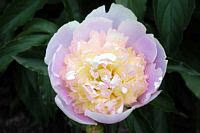
 With their identification verified, 100 peonies were moved to their new home in the Oshawa Valley Botanical Gardens by volunteers from the Oshawa Garden Club, the Canadian Peony Society and the staff of the Oshawa Parks Department. Included in the collection are some of the cultivars originally bred by William Brown.
 The stunning gazebo commemorates the 75th anniversary of the Oshawa Garden Club and creates a delightful focal point in the Peony Garden entrance.

Corporations or community groups celebrating major milestones are invited to sponsor future additions to the Oshawa Valley Botanical Gardens. To learn about upcoming naming opportunities, contact us.
The gardens are stunning throughout the summer, with each week revealing a new treasure to be enjoyed. Photographs and plans of new garden developments will be posted on this website as they are confirmed, so visit both the gardens and this website frequently to stay up-to-date!
THE PEONY GARDEN


The Oshawa Valley Botanical Gardens is made up of several linked specialty gardens. The Peony Garden is the first OVBG Specialty Garden to be completed. Located at 155 Arena Street, it is conveniently situated in close proximity to both Parkwood Estate and the Oshawa Creek trail.
The Peony Garden was established during the fall of 2001, with 100 peonies donated by the Canadian Peony Society from theWally Gilbert Collection. This contribution led to the official launch of the OVBG. In 2002 and 2003 further donations from the Canadian Peony Society, as well as supplemental purchases from peony breeders and suppliers from across North America, expanded the garden. The peony collection now numbers over 275 plants and includes 250 different cultivars. The peony collection contains a balanced selection of different flower forms and colours including singles, 22% semi-doubles, 37% doubles and 15% Japanese. The succession of bloom starts around May 20th and continues through to about June 25th. The peak bloom period typically occurs during the first two weeks of June. The Annual Peony Festival coincides with the climax of the bloom cycle in June
The Wally Gilbert Collection

Included in the peony garden is an interesting collection of peonies donated from the estate of Wally Gilbert. Gilbert took over the nursery of a 19th century peony breeder named William Brown. Gilbert sold peonies at the nursery until the mid-1980s. He retained a large peony collection until his death. Wishing to preserve his peony collection, Gilbert's friends and family approached the Canadian Peony Society to assist them in finding a permanent home for his collection. The peonies were moved to a farm just north-east of Oshawa where their identification was verified. In 2001, volunteers from the Oshawa Garden Club, the Canadian Peony Society and the staff of the Oshawa Parks Department moved one hundred peonies to their new home, the Oshawa Valley Botanical Gardens. Included in the collection are some of the cultivars bred by William Brown and one named for Wally Gilbert's wife, 'Irene May Gilbert'.

The Peony Festival showcases the Gilbert Peony Collection. Wally Gilbert acquired a nursery from a 19th century peony breeder named William Brown. Gilbert then sold peonies at the nursery until the mid-1980s and retained a large peony collection until his death.
Wishing to preserve his wonderful collection and celebrate a beloved individual's passion, Gilbert´s friends and family approached the Canadian Peony Society to assist them in finding a permanent home for his collection.

 With their identification verified, 100 peonies were moved to their new home in the Oshawa Valley Botanical Gardens by volunteers from the Oshawa Garden Club, the Canadian Peony Society and the staff of the Oshawa Parks Department. Included in the collection are some of the cultivars originally bred by William Brown.
 Canadian Peony Society
The Canadian Peony Society (CPS) has been an active participant in the development of the Peony Garden, donating one-third of the peonies. The CPS also selected the remaining peonies, which were purchased from peony nurseries. About forty percent of the collection contains hybrid varieties, mostly from well known hybridizers including, Auten, Bigger, Brand, Glasscock, Hollingsworth, Kelsey, Klehm, Krekler, Reath, Sass, Saunders and Wissing. Many of these peonies are not widely known and are hard to find varieties.
The Peony Garden is located at the Oshawa Valley Botanical Gardens on the south side of Adelaide Ave. West between Kaiser Crescent and Arena Street, next to the serene beauty of the Oshawa Creek in Oshawa, Ontario.
Architectural Elements
To create a unified feel between each garden in the series, signature architectural elements have been adopted. Adding distinction to the gardens, two stunning new features were added in 2006: an ornamental gazebo and a new pedestrian footbridge.
Rotary Bridge, which was opened in celebration of the 100th anniversary of Rotary International in 2006, was commissioned by the City of Oshawa for the enjoyment of all visitors and citizens.


Corporations or community groups celebrating major milestones are invited to sponsor future additions to the Oshawa Valley Botanical Gardens. To learn about upcoming naming opportunities, contact us.
The gardens are stunning throughout the summer, with each week revealing a new treasure to be enjoyed. Photographs and plans of new garden developments will be posted on this website as they are confirmed, so visit both the gardens and this website frequently to stay up-to-date!
Subscribe to:
Posts (Atom)